


Summary: The Naira, Not Inflation Alone, Is Now Driving the CBN’s Decision
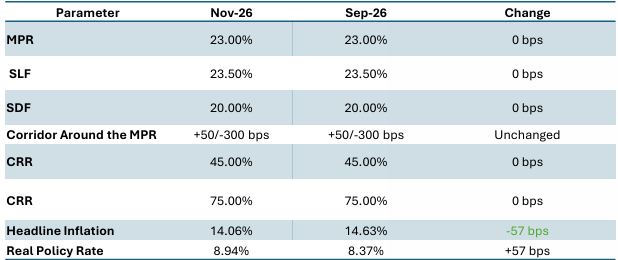
The Monetary Policy Committee (MPC) retained the Monetary Policy Rate (MPR) at 23% at its 308th
meeting, following the 350bps reduction in September. At first glance, the decision may appear a little
surprising, particularly as headline inflation moderated further to 14.06% in October from 14.63% in
September. On a simple basis, this leaves the real policy rate at approximately 8.9%, suggesting that
there is still room for further monetary easing. However, monetary policy decisions are not driven by
inflation alone. In our understanding, the CBN is becoming increasingly concerned about the renewed
pressure in the foreign exchange market and the implications for capital flows and exchange-rate
stability.
Source: NBS, SPH Equities Trading Desk
The naira has come under renewed pressure, with the official exchange rate moving towards the
₦1,400/$ level, while the parallel-market premium widened temporarily before moderating. External
reserves have also declined from about $55.25bn in September to approximately $54.6bn currently.
Although these movements may not yet represent a major deterioration in external conditions, they are
developments the CBN would not want to see persist. Further reductions in domestic interest rates
could weaken the attractiveness of naira-denominated assets, potentially encouraging capital outflows
and adding pressure to the exchange rate. This is particularly important given that foreign portfolio
investors are sensitive to relative returns and exchange-rate expectations.
There is also the domestic fiscal outlook to believe considered. With election and campaign activities
approaching, government spending could increase, while the rising fiscal deficit presents an additional
concern. Depending on how this spending is financed, it could introduce further liquidity into the
economy and complicate the disinflation process. At the same time, the softer oil-price trend could
moderate one of Nigeria’s major sources of foreign-exchange earnings. Taken together, these factors
suggest that the CBN is prioritising the preservation of exchange-rate stability and investor confidence
rather than pursuing another immediate rate reduction.
What Does This Mean for Equities?
For the equity market, the decision presents a mixed picture. On one hand, retaining the MPR at 23%
means that the cost of money is unlikely to decline further in the immediate term. This could limit the
near-term valuation support that another rate cut might have provided, particularly for stocks whose
valuations are sensitive to changes in discount rates. Fixed-income yields may also remain relatively
attractive compared with equities, depending on how the yield curve responds to liquidity conditions.
On the other hand, maintaining relatively high domestic yields could help preserve the attractiveness of
naira-denominated assets and support exchange-rate stability. This is important because sustained
currency volatility can increase the cost of imported raw materials, create uncertainty around corporate
earnings and put pressure on companies with foreign-currency exposure. A more stable exchange-rate
environment would therefore be supportive of corporate planning and earnings visibility.
For companies with significant borrowing requirements, the absence of another rate reduction means
that finance costs may remain elevated for longer. However, the impact will vary across sectors,
depending on leverage, funding structure and working-capital requirements. We would therefore
continue to favour companies with strong cash flows, manageable debt levels and the ability to protect
margins in the current environment.
Kindly find the Report Below
Thanks for reading.