

Summary: Headline Disinflation Strengthens, but Underlying Price Pressures Persist
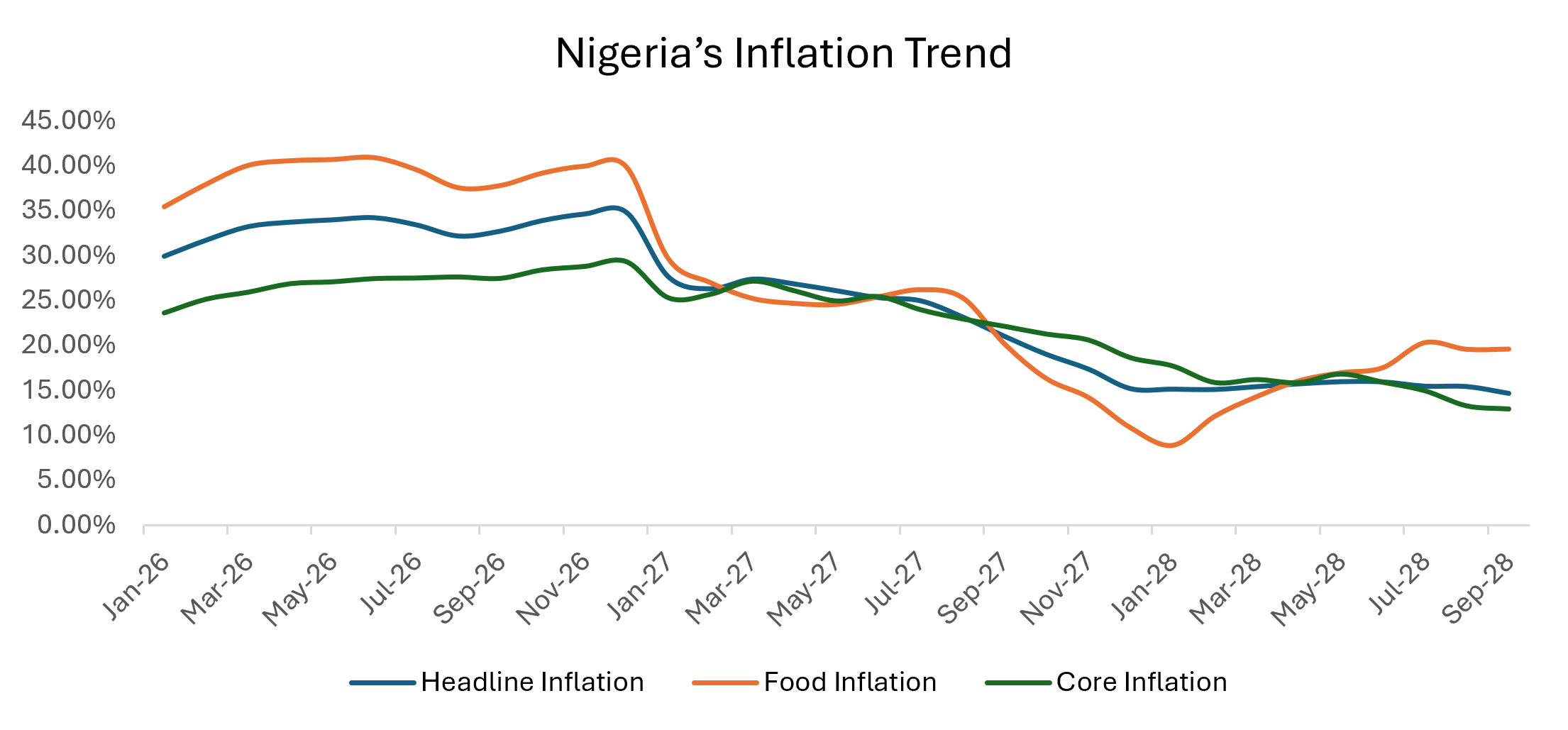
Nigeria’s headline inflation moderated to 14.63% y/y in September from 15.39% in August, extending the disinflation trend. However, the more significant movement was the sharp slowdown in monthly inflation to 0.06% from 0.71%. While this points to a substantial easing in the pace of price increases, the composition of the decline suggests that the improvement was not yet broad-based across the consumer basket. In our view, the easing has been a signal rather than a stimulus, as the transmission into the real economy remains slow.
Source: CBN, SPH Equities Trading Desk
Food inflation rose marginally to 19.59% y/y from 19.57%, while the monthly rate fell to -1.55% from 1.02%. The annual rate edged higher despite the monthly decline, highlighting the difference between a fall in prices during the month and the still-elevated price level relative to a year earlier. Core inflation also moderated to 12.95% y/y from 13.29%. However, its monthly rate accelerated to 1.11% from -0.06%, suggesting that underlying price pressures remain a concern even as headline inflation continues to ease.
Food Inflation: Relief is emerging, but affordability remains a concern
The decline in monthly food inflation provided some relief in September. However, the marginal increase in annual food inflation suggests that food-price pressures remain elevated. In our view, the September print should therefore be interpreted as a decline in monthly food prices rather than evidence that the food inflation challenge has been resolved. The durability of this improvement will depend on food supply conditions and whether the decline in monthly prices persists in the coming months.
Core Inflation: The more important signal
The moderation in annual core inflation is encouraging, but the increase in its monthly rate deserves closer attention. Core inflation rose by 1.11% month-on-month after declining by 0.06% in August. This divergence suggests that, while the decline in food prices provided relief, price pressures elsewhere in the basket remained firm. For the CBN, the challenge is to determine whether this monthly acceleration is temporary or signals renewed underlying inflationary pressure.
Our Outlook and Implications for the Nigerian Market
September’s figures strengthen the case for continued disinflation, but the acceleration in monthly core inflation argues against assuming that price pressures have been fully contained. The CBN’s recent reduction of the MPR to 23% will need to be assessed alongside subsequent inflation readings, particularly the persistence of lower monthly headline inflation and the direction of core prices. For equities, lower headline inflation could gradually support consumer purchasing power, reduce pressure on operating costs and strengthen the case for lower interest rates over time. However, the benefits will not be uniform. Companies with strong pricing power and effective cost management are better positioned to protect margins, while businesses facing persistent input costs and weak consumer demand may struggle to translate lower inflation into stronger earnings.
Kindly find the Report Below
Thanks for reading.